Yes, class 4 rapids are advanced whitewater with powerful current, large waves and holes, and a greater chance of injury if someone falls out of the raft. But running Class IV water with an experienced commercial guide is very different from attempting it on your own.
On the Yellowstone River near Gardiner, most whitewater is Class II and III. Some rapids in Yankee Jim Canyon can reach Class IV during high spring runoff, when snowmelt makes the river higher and faster
We’ve been guiding trips on the Yellowstone River for more than 30 years. Here’s what Class IV rapids are, how dangerous they can be, what they feel like, and how to decide whether they’re right for you.
What Are Class IV Rapids?
All rapids are rated on the International Scale of River Difficulty, which runs from Class I to Class VI. Class IV is considered advanced whitewater. Rapids can have intense, powerful waves and holes, fast currents, narrow passages, and moves that require precise boat handling.
For a full explanation of every rating, see What Are the Different Whitewater Classes?
The rapid rating scale is not a fixed measurement because each river’s difficulty changes with its water level. A rapid that runs Class III in late August may become Class IV during peak runoff in June.
This happens a lot on the Yellowstone River. Some rapids in Yankee Jim Canyon normally run Class III but can push into Class IV during high water.
How Dangerous Are Class 4 Rapids?
Class IV carries more risk than Class III, especially if someone falls out. The current is stronger, waves and holes are larger, and there may be less time to recover before the next feature. Swimming can also last longer and make it harder to get back to the raft or shore.
Cold water adds another factor. Peak flows on the Yellowstone usually happen during spring snowmelt, so the biggest water of the season is also some of the coldest.
That does not mean every guided Class IV rafting trip is extremely dangerous. A commercial guide changes the risk considerably.
Your guide knows the river, knows which line to take through each rapid, and can adjust that line as water levels change. Before launching, you’ll learn how to paddle, how to stay in the boat, and what to do in the unlikely case you fall out. You’ll also wear a properly fitted life jacket and other safety gear appropriate for the conditions.
All of our guides are certified in Swiftwater Rescue, First Aid, and CPR.
What Do Class 4 Rapids Feel Like?
For a broader look at rafting risk, see Is Whitewater Rafting Dangerous?
Class IV carries more risk than Class III, especially if someone falls out. The current is stronger, waves and holes are larger, and there may be less time to recover before the next feature. Swimming can also last longer and make it harder to get back to the raft or shore.
Cold water adds another factor. Peak flows on the Yellowstone usually happen during spring snowmelt, so the biggest water of the season is also some of the coldest.
That does not mean every guided Class IV rafting trip is extremely dangerous. A commercial guide changes the risk considerably.
Your guide knows the river, knows which line to take through each rapid, and can adjust that line as water levels change. Before launching, you’ll learn how to paddle, how to stay in the boat, and what to do in the unlikely case you fall out. You’ll also wear a properly fitted life jacket and other safety gear appropriate for the conditions.
All of our guides are certified in Swiftwater Rescue, First Aid, and CPR.
For a broader look at rafting risk, see Is Whitewater Rafting Dangerous?
What Do Class 4 Rapids Feel Like?
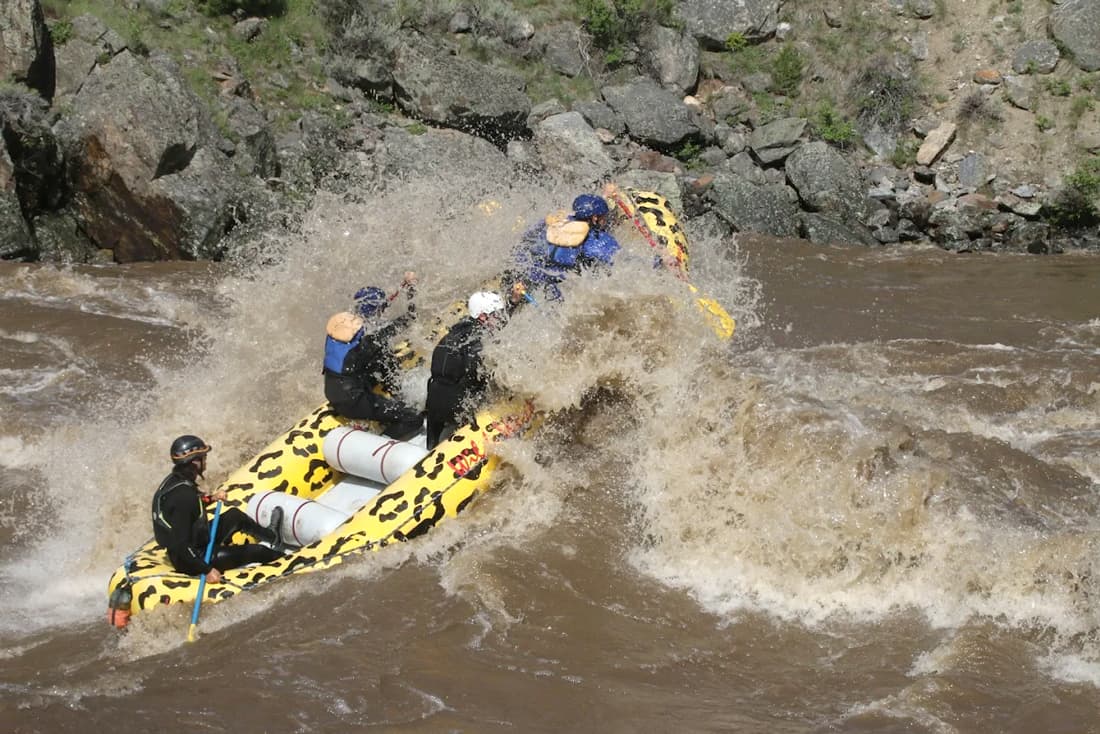
Class IV feels faster and more powerful than Class III. Expect bigger waves, harder hits against the raft, stronger current, and more paddling. Your guide may call several commands in quick succession to position the raft correctly.
You also have less downtime during the rapid. In Class III, you may splash through a wave train and immediately enter calmer water. A Class IV rapid can require more maneuvering before the boat reaches the end.
Can Beginners Raft Class 4 Rapids?
Sometimes. Class IV is not considered beginner whitewater, but first-time rafters can encounter Class IV rapids on guided commercial trips. Whether that’s appropriate depends on the river, water level, specific rapid, outfitter, and individual guest.
A guided trip that contains one or two Class IV rapids is also very different from an entire river section rated Class IV.
On the Yellowstone River, guests are not spending the whole day on Class IV water. Most of the river is Class II and III. The more challenging rapids are concentrated in Yankee Jim Canyon, and they reach Class IV mainly during high water.
If you can follow instructions quickly, paddle when asked, stay seated and balanced, and are comfortable around fast-moving water, your outfitter can help determine whether current conditions are a good match for you.
Class IV Rapids on the Yellowstone River
Our full-day whitewater trip continues past the Town Stretch and into Yankee Jim Canyon, where you’ll find rapids including Revenge, Big Rock, The Pinch, and Boxcar.
These rapids usually run Class III but some can reach Class IV during high spring runoff.
You can see how these rapids change through the season in What Class Rapids Are on the Yellowstone River?
Are Class 4 Rapids Right for You?
Class IV may be a good fit if you want a more intense whitewater experience and are comfortable getting soaked, paddling hard, and following guide commands quickly.
If someone in your group is very nervous around fast water or wants a more relaxed trip, consider our scenic floats.
The easiest way to decide is to match the trip to the most hesitant person in your group rather than the boldest.