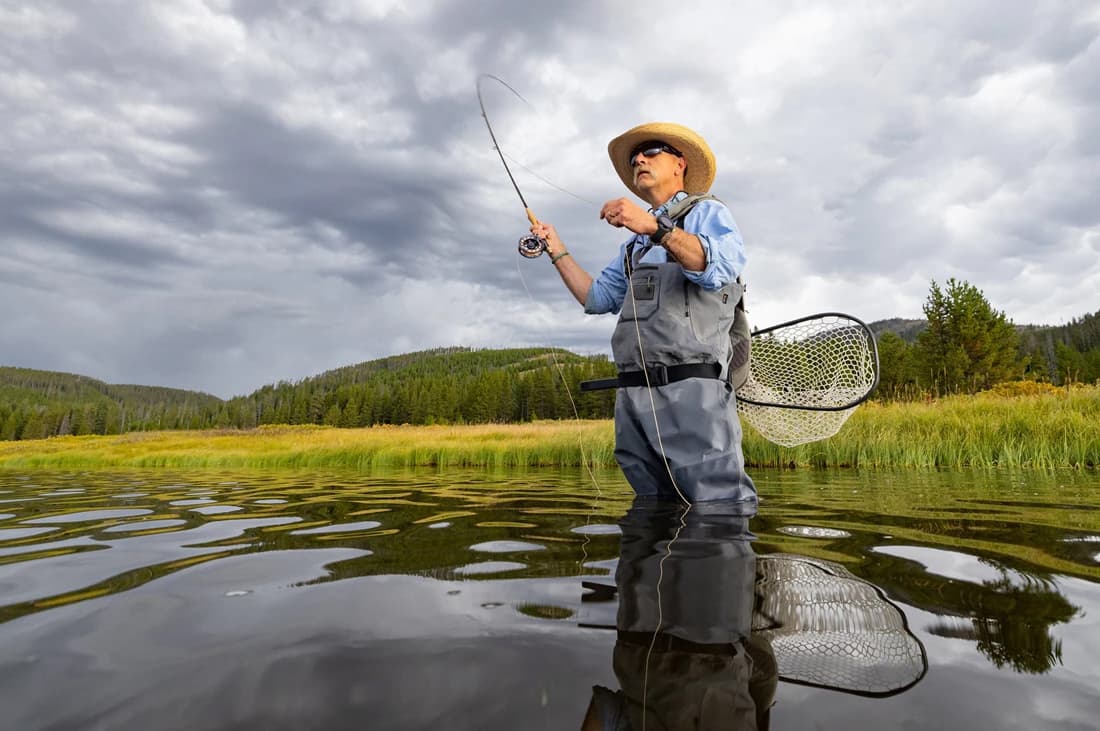
Fishing in Yellowstone. Credit: NPS.
Yes, you can fish in Yellowstone National Park. You’ll need to buy a park fishing permit if you’re 16 or older, and you’ll need to follow specific gear and tackle rules (no felted footwear, barbed hooks, bait, or scented attractants) to protect the park’s wild trout populations.
Yellowstone allows both fly fishing and spin fishing with artificial, lead-free lures, but the Firehole, Madison, and Gibbon Rivers are fly-fishing only.
Some waters close temporarily during warm temperatures, so check Yellowstone’s fishing page before you head out.
Quick Checklist: What You Need to Fish in Yellowstone
- A Yellowstone National Park fishing permit if you’re 16 or older
- Barbless hooks, artificial flies or lures only, no bait or scented attractants
- No felt-soled boots or waders
- Check the National Park Service website for current closures before fishing
Yellowstone Fishing Permit Requirements
Who Needs a Permit, Where to Buy One, and What It Costs
Anyone 16 and older needs a Yellowstone National Park fishing permit. State fishing licenses from Montana, Wyoming, or Idaho aren’t valid in Yellowstone.
Current permit fees:
- 3-day permit: $40
- 7-day permit: $55
- Season permit (valid through current calendar year): $75
Buy permits at Recreation.gov, Yellowstone’s visitor centers or general stores, or local fly shops in West Yellowstone or Gardiner.
Pro tip: Download or screenshot your permit before entering the park. Cell service is unreliable in Yellowstone, and you’ll need to show your permit if a ranger asks.
Kids Fishing Rules
Any children 15 and under who fish don’t need a permit if they’re with a permitted adult. If they fish without adult supervision, they need a free youth permit signed by a parent or guardian. Find the free youth permits at visitor centers in the park.
Yellowstone Fishing Rules That Trip People Up
Yellowstone’s fishing rules protect native and wild trout. Break them and risk citations and fines.
Lead-free tackle only. Most lead sinkers, jigs, and weighted flies are prohibited. Use non-toxic alternatives like tungsten to protect waterfowl.
No bait or scented attractants. Organic bait (worms, minnows, salmon eggs) and scented gels or sprays aren’t allowed. This prevents the spread of fish diseases and invasive species.
Barbless hooks required. Pinch down your barbs before fishing. Barbless hooks reduce injury to fish and make catch-and-release easier.
No felt-soled boots or waders. Felt soles harbor invasive organisms. Use rubber-soled wading boots instead.
One rod per angler, attended at all times. You can’t leave a rod unattended or set multiple lines. Snagging fish is illegal.
When Can You Fish in Yellowstone?
Standard Fishing Season
Most of Yellowstone’s rivers, streams, and lakes open for fishing on the Saturday of Memorial Day weekend through October 31 each year.
Some waters have different opening and closing dates, special regulations, or are permanently closed to protect sensitive fisheries. Always check Yellowstone’s fishing page for updates.
Where Fishing Is Open Year-Round
Two river sections allow year-round fishing:
Madison River: From the park’s west boundary upstream to the Madison Junction (where the Firehole and Gibbon Rivers meet).
Gardner River: From Osprey Falls downstream to the confluence with the Yellowstone River near the North Entrance in Gardiner, Montana.
You can fish these sections in winter and early spring when most park waters are closed.
Fishing in Yellowstone’s Lakes
Lakes are easier for beginners and kids than rivers. You can cast from shore without wading, and the calmer water is less intimidating.

Top Lakes for Fishing
Yellowstone Lake is the park’s largest lake with shore access at Bridge Bay, Gull Point, and near Fishing Bridge. Native Yellowstone cutthroat trout are the primary catch. Opens around June 15 due to ice, closes October 31. Catch-and-release only for cutthroat trout.
Lewis Lake has easy parking and an accessible shoreline along the road between the South Entrance and West Thumb. Less crowded than Yellowstone Lake. Brown trout and lake trout are common.
Shoshone Lake requires a backcountry hike or paddle but rewards you with excellent fishing and solitude. Best for families with older kids
Fishing Closures and Warm-Weather Restrictions
To protect trout, Yellowstone frequently closes rivers and streams with little notice when water temperatures rise and flows drop.
Lakes are less affected by heat closures than rivers because their larger water volume maintains more stable temperatures. If rivers close, lakes often stay open.
Here are their two types of closers:
- Hoot owl closures: Fishing prohibited from 2:00 PM until sunrise. Morning fishing only.
- Full closures: No fishing allowed until conditions improve.
Closures usually happen in July and August during excessive heat. Yellowstone’s fishing page and visitor centers will have updates.
Guided Fly Fishing in Yellowstone
You don’t need a guide to fish in Yellowstone, but fishing guides know what’s open, the best fishing spots, how to catch-and-release, and they provide all the gear for a fun day on the water.
If you hire a guide, you still need to buy your own fishing permit. But guides will handle all the other rules like using barbless hooks, artificial flies, and lead-free tackle.
When choosing a guide, look for a local company with strong reviews and experience with all skill levels.
Tips for a Fun Day Fishing in Yellowstone
Pick easy-access spots. Look for riverbank areas where you can wade safely or cast from shore. The Madison River near Madison Junction and the Gardner River near Mammoth have beginner-friendly river access. For lakes, try shoreline areas at Bridge Bay or Lewis Lake where you can fish without wading.
Fish mornings during warm months. Early morning fishing avoids afternoon heat restrictions and gives you the best chance at active trout before the sun warms the water.
Bring snacks, water, and sun protection. Pack more food than you think you’ll need. Sunscreen, hats, and plenty of drinking water are essential.
Keep fish in the water. If you catch a fish, wet your hands before touching it, remove the hook quickly, and release it gently. Barbless hooks make this faster and easier.
Stay bear aware. Yellowstone is bear country. Make noise while walking to and from fishing spots, carry bear spray, and never approach wildlife. Keep at least 100 yards from bears and wolves, and 25 yards from other animals.
Go Fly Fishing in Yellowstone
Want to fish in Yellowstone? Our full- and half-day Walk & Wade fly fishing trips let you take in the park’s beauty while catching Yellowstone cutthroat, rainbow, and brown trout, with all fishing gear provided.