
Late spring and early fall are the best times to visit Yellowstone National Park for most first-timers. May through early June and September have mostly open roads, active wildlife, and a fraction of the summer crowds.
Mid-June through August is the warmest and easiest time to check off your must-see list, with every road and trail open, but it’s also the busiest and most expensive.
Start with the top activities for your vacation.
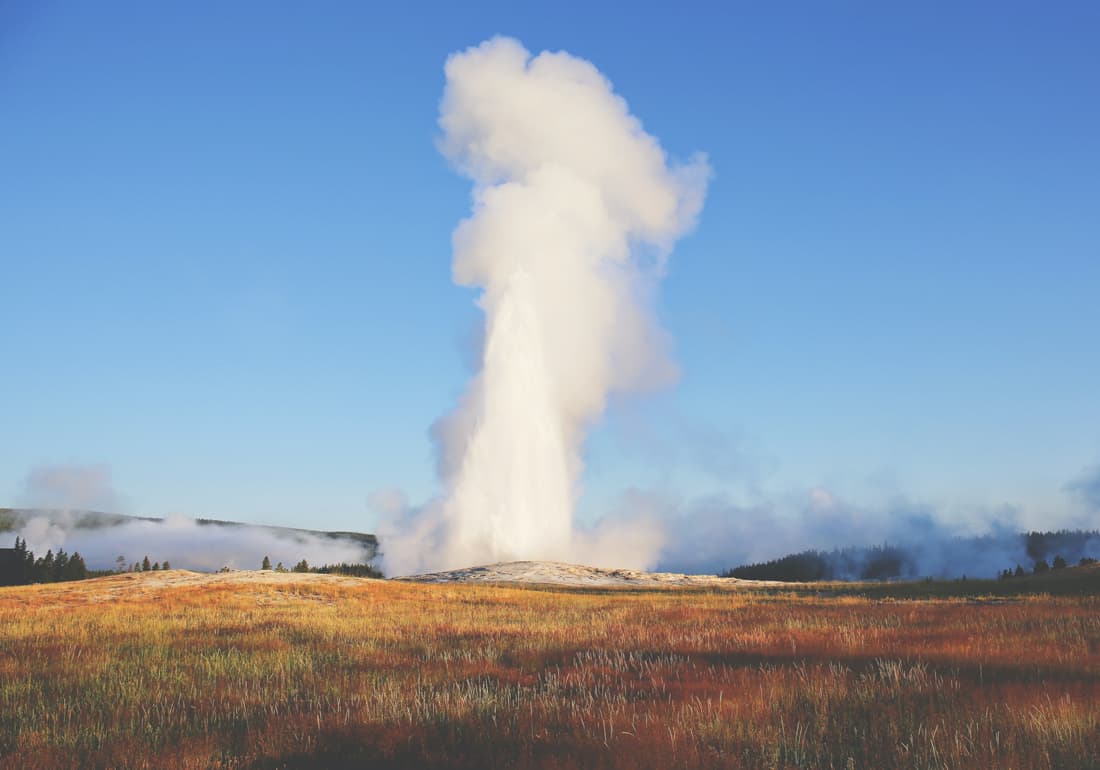
What Do You Want to Do in Yellowstone?
Late spring is best for watching wildlife from the road and exploring the geyser basins, Old Faithful, and Mammoth Hot Springs. Bears are out, bison calves (aka red dogs) are appearing, and the lower park is open while the crowds are still thin.
Summer is the most common time to visit, and the easiest if you want to see several sites in one trip. All park services are open, temperatures are warm, and gateway towns like West Yellowstone and Gardiner have plenty of fun activities. It’s also the busiest season, so plan extra time between stops.
Early fall is ideal for hikers who want to explore short trails or head into the backcountry, with cooler air, fewer people, and trails still mostly open before the snow.
Winter is the season for wolf-watching. The animals hunt and gather at lower elevations through the cold months, often visible from the year-round road through Lamar Valley.
For whitewater rafting, fishing and horseback rides near Yellowstone, book from May through September, for big rapids, hungry trout, and gorgeous mountain scenery.
No matter when you go, check Yellowstone’s conditions on the National Park Service website for updates on weather, construction, trail closures, and other important information.
Yellowstone by Season

Bison calves (aka Red Dogs) are born during sprintime
Spring (March to May)
Spring is a quiet in-between season, which is exactly why people like it. Wildflowers start to appear, animals are active and visible, and you’re not competing for parking. But the weather is cool — daytime highs run from the 30s and 40s in March into the 50s and 60s by May, though snow is common into May and nights stay cold.
Most roads and entrances open mid-April, weather permitting. Higher routes like Dunraven Pass and the Beartooth Highway usually don’t open until late May or early June. The North Entrance at Gardiner is open to vehicles year-round, so it’s a reliable early-season way in.
Tips for visiting Yellowstone in spring
- Bring your binoculars for wildlife and baby animals: Bears with cubs and bison calves start appearing in the meadows.
- Watch for wildflowers like arrowleaf balsamroot, glacier lily, shooting star, and lupine.
- Take a lower-elevation hike like the Lamar River Trail, the Yellowstone River Picnic Area Trail near Tower Falls, or the Riverside Trail from West Yellowstone.
Pack for unpredictable weather. Expect anything from sun to snow flurries, with snow common into May.

Summertime on the Gibbon River in Yellowstone National Park
Summer (June to August)
Summer is the most popular time to visit because the weather is warm, every road and trail is open, all the lodges and visitor centers are running, and you can see a lot of the park in one trip. The trade-offs are crowds and cost.
This is the only season with the whole park reachable by car, including high routes like Dunraven Pass and the Beartooth Highway. It’s also when popular parking lots and trailheads fill early, so timing your day matters more than during any other season.
Tips for visiting Yellowstone in summer
- Start early. Geyser basins, trailheads, and parking at popular sites fill by mid-morning, so a sunrise start makes a real difference.
- Book lodging well ahead. In-park hotels and campgrounds often fill close to a year in advance, and gateway towns like Gardiner fill up too.
- Add a river day. Whitewater rafting and guided fishing on the Yellowstone River near Gardiner run all summer, and a half-day trip pairs easily with park sightseeing.
Prepare for afternoon storms. Pack a rain layer and plan exposed hikes for the morning.

Fal colors on the Shoshone River in Yellowstone National Park
Fall (September to November)
Fall brings cooler air, golden cottonwoods and aspens, and a big drop in crowds after Labor Day. For many visitors, September is the best overall month: summer access is still mostly intact, but the park feels calmer. Daytime highs are in the 60s in September, with cold nights and the first real snow possible by late-month.
Most roads and facilities stay open through September and into early October, then begin closing as snow arrives. By early November, nearly everything is closed to regular vehicles for the season.
Tips for visiting Yellowstone in fall
- Listen for elk. The September rut is one of the most memorable sounds in the park.
- Pack for a wide temperature swing. Mornings can be near freezing and afternoons mild on the same day.
- Take a scenic drive. Fall color along the Yellowstone River corridor is an excellent way to spend a day.

Wildlife watching in winter is excellent in Yellowstone
Winter (December to February)
Winter is the most different version of Yellowstone. Daytime temperatures are usually between 0–25°F, with frequent sub-zero lows overnight.
The only road open to regular vehicles year-round runs from the North Entrance at Gardiner through Mammoth Hot Springs and Lamar Valley to the Northeast Entrance at Cooke City. The rest of the park’s interior is reachable only by commercially guided snowmobile or snowcoach, generally from mid-December to mid-March.
Tips for visiting Yellowstone in winter
- Base your trip in Gardiner. The North Entrance is your year-round way in and the access point for Lamar Valley wolf-watching.
- Book guided snowcoach or snowmobile tours ahead. They’re the only way to reach the park interior in winter and they fill up.
- Dress for serious cold. Plan on wool base layers, waterproof outer layers, and insulated winter boots.
- Drive carefully. Roads can be snow-packed and icy, so check your tires before you go and allow extra time.
Get all the details about Visiting Yellowstone in Winter.
What About Grand Teton National Park?
Many people combine a trip to Yellowstone with Grand Teton National Park, which is just south of Yellowstone, a little over an hour’s drive from the park interior. The best time to visit Grand Teton is the same as Yellowstone: late spring through early fall, with September a great choice for fewer crowds and good wildlife viewing.
If you’re planning a longer trip, it’s realistic to see both parks in the same visit, since the road through Yellowstone’s South Entrance connects the two.
When Should You Go to Yellowstone?
There’s no single right answer, but here’s a simple way to decide:
- Go in the summer if you want to see as much of the park as possible in one trip and don’t mind crowds.
- Choose late May, early June, or September if you want most of that access with far more breathing room.
- Visit in winter if you want the quietest, most unusual version of Yellowstone, want to see wolves, and are okay with limited road access.
Whenever you come, a guided trip can take some of the planning pressure off, especially if rafting, fishing, or horseback riding along the Yellowstone River is part of what brought you here.
If you have questions about timing your visit or things to do in the area, reach out to our team at Wild West Rafting in Gardiner: (406) 848-2252.