Whitewater rapids are grouped into six classes, from Class I (gentle) to Class VI (extremely dangerous), using the International Scale of River Difficulty.
Each whitewater class looks at factors like:
- Strength of the current
- Size and shape of waves and holes
- Number of rocks and obstacles
- How precise the boat handling needs to be
- How serious the consequences are if someone swims
Flatwater: Calm, Gentle Sections
Flatwater isn’t an official whitewater class, but it’s a common term used to describe very calm, gentle sections of a river. Because you typically need to paddle in order to move downstream, these stretches can feel more like a lake than a river.
Class I Whitewater
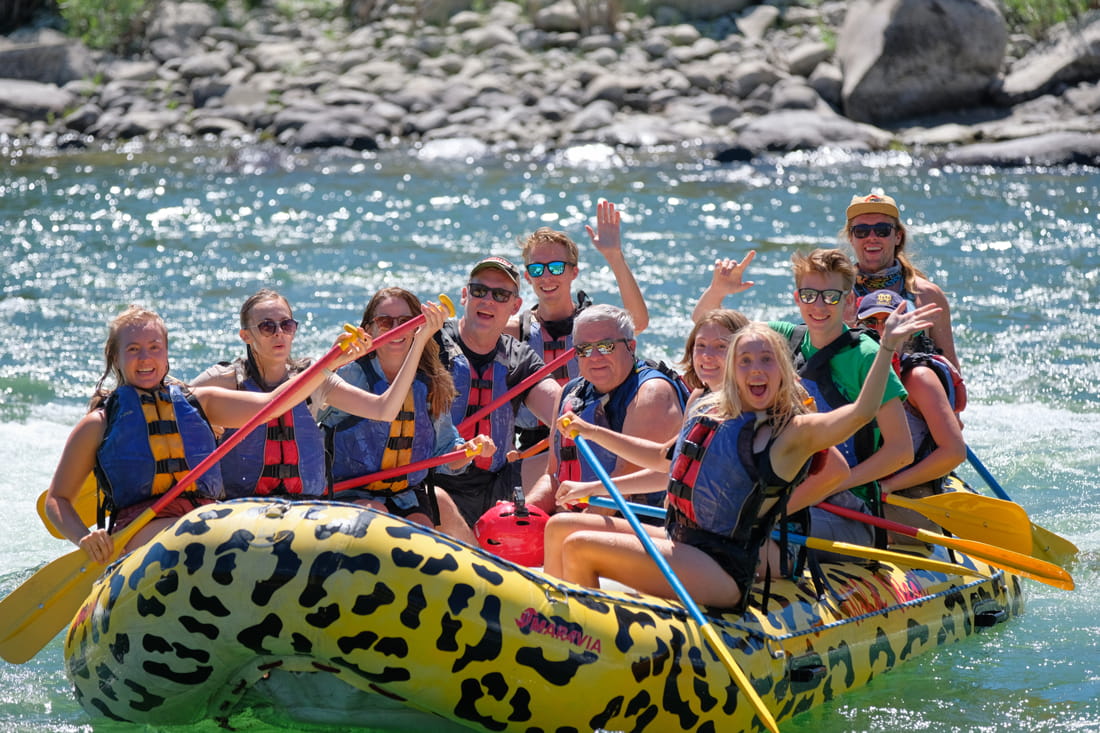
Class I whitewater is gentle, easy-moving current with small waves, very few obstacles, and swimmers can usually stand up or reach calm water quickly.
What Class I Feels Like:
- Similar to a lazy river with a little more current
- Great for relaxing between bigger rapids
- You may get light splashes, but not big hits of water
On the Yellowstone River, Class I stretches give everyone a chance to look around, enjoy the surrounding beauty, and recover between splashy sections. Families with young children and first timers say these calm moments help them feel comfortable on their first whitewater trip.
Wild West’s scenic float trips on the Yellowstone are a great way to enjoy gentle Class I rapids.
Class II Whitewater

Class II whitewater has more current and medium-sized waves, but your guide helps make the rapids feel easy.
What Class II Feels Like:
- Noticeably splashier and faster than Class I
- Paddling matters but the moves are simple and guided
On the sections of the Yellowstone River we run, many family-friendly sections are Class II. This is where kids and adult first-timers find their comfort zone with fun splashes and excitement.
Class III Whitewater

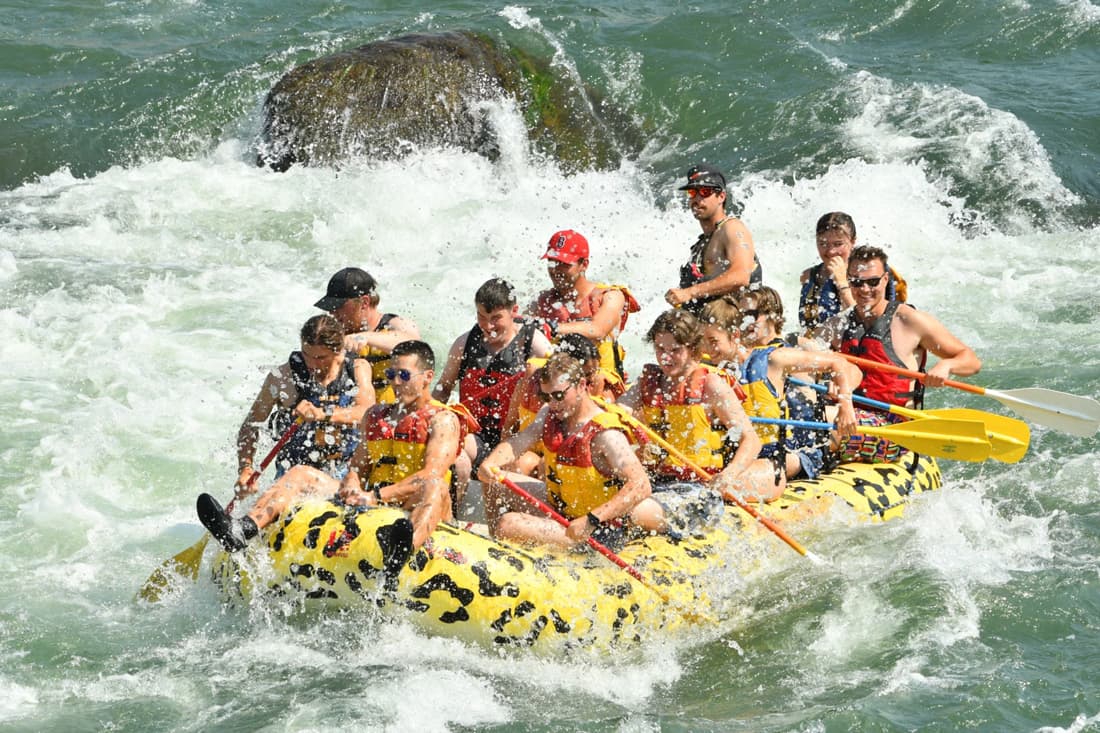
Class III whitewater is where rapids get bigger and more intense, especially in early summer when river flows are higher.
What Class III Feels Like:
- Bigger waves that splash over the bow as the raft rises and drops
- Quick bursts of speed and more powerful currents
- Clear, shouted paddle commands from your guide
- Exciting and high energy, followed by calmer sections where you can regroup
Are Class III Rapids Dangerous?
On their own, Class III rapids are considered intermediate. With proper safety gear, an experienced guide, and suitable water levels, many first-time rafters and families enjoy trips with Class II–III rapids.
For a local example, Yankee Jim Canyon, which we run on our more adventurous trips, has several Class II–III rapids. In June, waves can reach an exciting and powerful 4–5 feet. As the water drops into August, the same rapids spread out into smaller, fun waves.
Key points for safety-conscious guests:
- You wear a fitted life jacket and, when appropriate, a helmet
- Guides brief your group on safety positions and what to do if someone falls out
- Trips are matched to the group’s age, comfort level, and the day’s river conditions
Class III is where adventurous beginners often come off the river saying, “That was the perfect amount of excitement.”
Class IV Whitewater
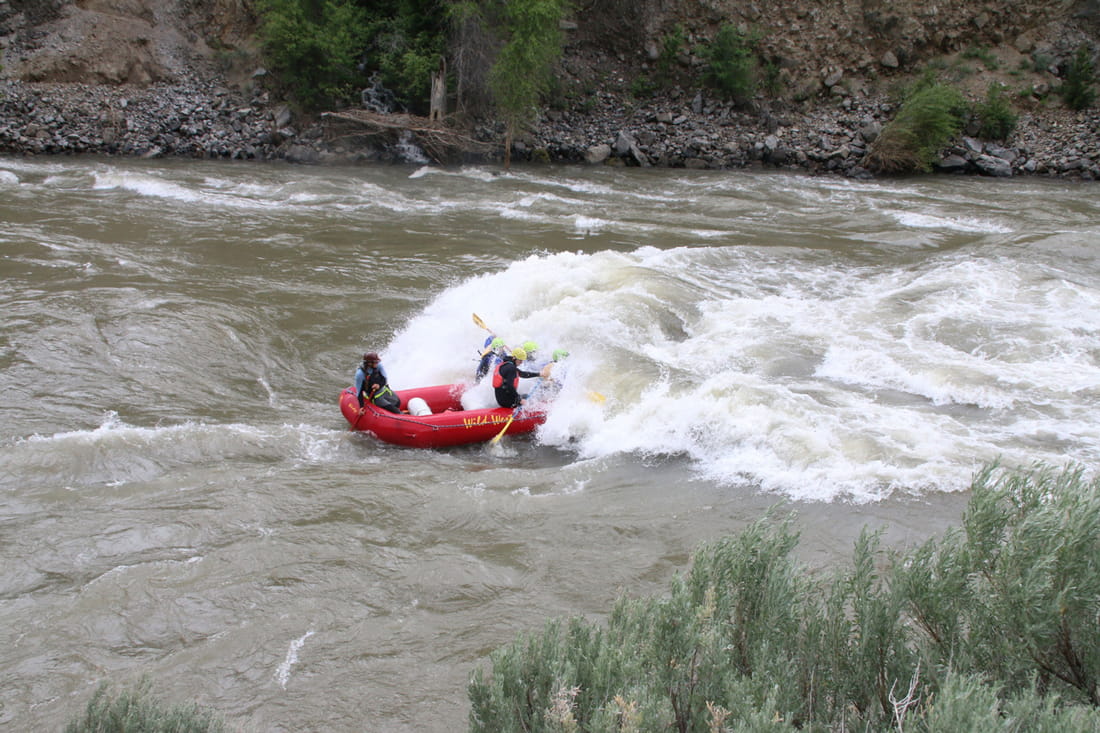
Class IV whitewater is advanced and technical, with long rapids, strong continuous current, and larger, more powerful waves.
While the Yellowstone River’s main whitewater sections are generally in the Class II–III range, some rapids can feel closer to Class IV during high water.
What Class IV Feels Like:
- Exciting action with faster, bigger waves and less downtime
- Strong, consistent paddling
- Quick reactions to your guide’s commands
Class IV sections are usually reserved for guests who are confident in the water, ready to paddle hard, and comfortable with bigger hits and a stronger current. Your guide monitors daily water levels and adjusts trips based on current conditions and your group’s experience level.
Class V Whitewater
Class V rapids are expert-level whitewater with very strong currents, powerful hydraulics, and large, unavoidable waves and holes. These rapids are run only by teams of highly experienced paddlers who scout the rapid first.
The Yellowstone River doesn’t have Class V rapids.
Class VI Whitewater
Class VI is the top of the scale and describes whitewater that’s considered unrunnable or extremely hazardous, like the Niagara Gorge in New York.
There are no Class VI rapids on the Yellowstone River.
How Water Levels Affect Whitewater Classes
In the early season in North America (late spring into early summer), snowmelt increases water levels and river speed. Waves get taller and more powerful, Class II–III rapids feel more intense and closer together, and there’s less recovery time between rapids.
By late summer, flow slows and water levels drop. Waves generally become smaller, stretches between rapid sections get longer, and sections that felt like strong Class III in June can feel like mellow Class II in August.
Understanding Whitewater Classes
Whitewater classes are a universal system that define rapid intensity and risk on any river. Whether you’re looking for a calm Class I float, intense Class IV rapids, or anything in between, these ratings help you find trips that match your comfort and adventure level.
When booking your rafting trip, think about the details of your group like ages, swimming ability, and whether they’re up for a gentle float or bigger thrills.
Share this information with your guide, and they’ll help you find the right section and conditions for an unforgettable day on the water.